In Vajrayana Buddhism, Dakinis are not merely symbolic feminine deities but powerful manifestations of awakened wisdom itself. They represent dynamic, living energy that transforms ignorance into realization. Unlike static spiritual symbols, Dakinis actively participate in guiding practitioners toward enlightenment through intense, compassionate, and often wrathful forms.
Among the many Dakini manifestations described in tantric literature and thangka traditions, three stand out for their deep philosophical and meditative importance: Sarva Buddha Dakini (Vajrayogini), Singhamukha Dakini, and Jana Dakini. Each of these represents a distinct mode of awakened awareness—blissful transformation, fearless destruction of obstacles, and intuitive direct wisdom.
What is a Dakini in Vajrayana Buddhism?
The term “Dakini” refers to a wisdom-being who embodies the movement of enlightened awareness. They are often described as “sky-goers,” symbolizing freedom from conceptual limitations. In tantric practice, Dakinis appear in three layers of meaning:
- Outer Dakini: Visualized deities in thangkas and rituals
- Inner Dakini: Subtle energetic experiences within meditation
- Secret Dakini: Ultimate non-dual wisdom beyond perception
These three levels show that Dakini practice is not external worship but a progressive realization of mind itself.
Sarva Buddha Dakini (Vajrayogini): The Supreme Wisdom Flame
Sarva Buddha Dakini, widely identified with Vajrayogini, is regarded as the highest embodiment of tantric wisdom. She represents the total essence of all Buddhas unified in a single feminine form of enlightened energy. Her presence dissolves dualistic perception and transforms desire into wisdom.

Iconography
She is typically depicted in a dancing posture, surrounded by flames of wisdom. Her body is red, symbolizing transformed passion. She holds a curved knife (kartika) to cut ego-clinging and a skull cup (kapala) filled with transformed nectar of awareness. A garland of skulls symbolizes victory over ignorance.
Spiritual Meaning
Vajrayogini practices focus on the transformation of emotion into enlightenment. She is central to Highest Yoga Tantra traditions, especially in Sakya and Kagyu lineages. Through her visualization, practitioners dissolve ordinary perception and awaken to non-dual awareness.
Singhamukha Dakini: The Fearless Lion-Faced Protector
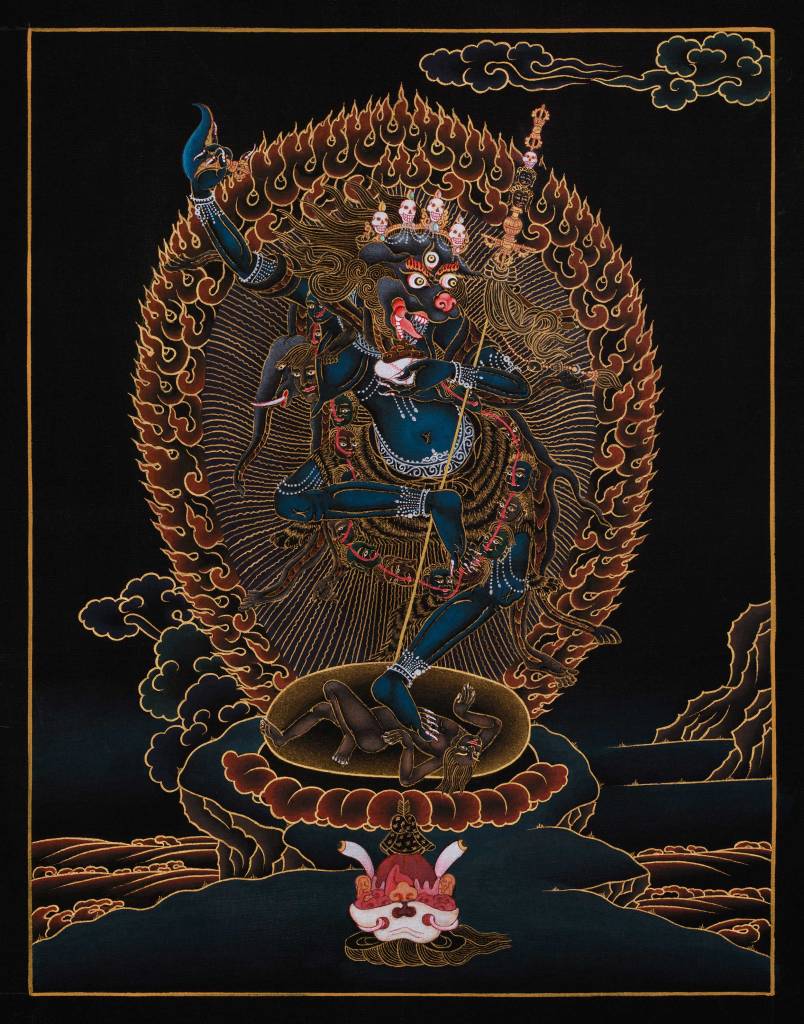
Singhamukha Dakini, meaning “Lion-Faced Dakini,” embodies fearless clarity and wrathful compassion. Her energy is not anger but unstoppable wisdom that cuts through illusion and inner fear.
Iconography
She is depicted with a lion’s face, symbolizing the roar of Dharma that destroys ignorance. Her dark or blue-black form represents vast emptiness and space-like awareness. Flames and wrathful expressions indicate purification of obstacles and delusion.
Spiritual Meaning
Singhamukha is primarily invoked for protection and obstacle removal. She dismantles fear, doubt, and negative karmic forces. Her energy is sharp, immediate, and uncompromising—awakening the practitioner from deep habitual confusion.
Jana Dakini: The Embodiment of Intuitive Wisdom
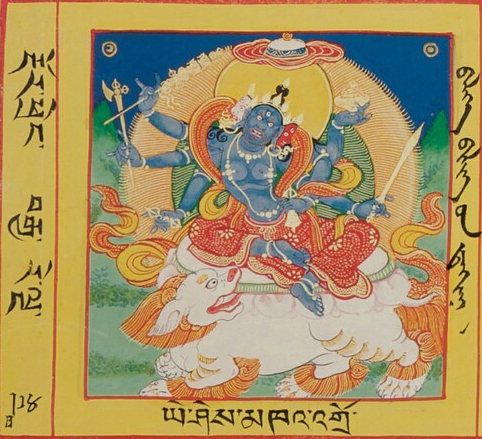
Jana Dakini (from Sanskrit “Jnana,” meaning wisdom) represents the highest form of intuitive, non-conceptual knowing. Unlike intellectual understanding, her wisdom arises directly from experiential awareness.
Iconography
She is often shown with multiple arms, symbolizing multidirectional enlightened activity. She may carry ritual implements that cut ignorance and guide beings toward clarity. Her posture is powerful yet controlled, representing mastery over instinctual energies.
Spiritual Meaning
Jana Dakini represents the stage where wisdom becomes spontaneous and effortless. She is not wrathful like Singhamukha nor ecstatically transformative like Vajrayogini, but calm, precise, and fully awakened in action.
Comparative Understanding of the Three Dakinis
These three Dakinis represent progressive dimensions of enlightenment:
- Sarva Buddha Dakini: Transforms desire into wisdom
- Singhamukha Dakini: Destroys fear and obstacles
- Jana Dakini: Reveals direct intuitive awareness
Together, they form a complete spiritual map—from transformation, to purification, to realization.
Conclusion
The three principal Dakinis in Vajrayana Buddhism are not separate mythological beings but expressions of a single enlightened continuum. Vajrayogini transforms emotional energy, Singhamukha removes inner and outer obstacles, and Jana Dakini reveals pure awareness beyond concepts.
In thangka art, these forms serve as visual meditation guides. They are not meant for aesthetic appreciation alone but function as precise spiritual technologies, guiding practitioners from ordinary perception to an awakened mind.
Ultimately, the Dakinis remind us that enlightenment is not distant—it is active, living, and already present within awareness itself.