Every practitioner on the Buddhist path runs into obstacles many from outside, but far more from within: ignorance, doubt, restlessness, craving, pride, and fear. Among the Eight Great Bodhisattvas, one figure is devoted almost entirely to this problem: Sarvanivaranavishkambhin, “He Who Removes All Obstacles.” Less famous than Avalokiteshvara or Manjushri, his role within meditation practice is nonetheless considered essential.
What Does the Name Mean?
Built from Sanskrit sarva (all), nivarana (hindrance), and vishkambhin (one who clears away), his name translates simply to “Remover of All Obstacles,” sometimes shortened to Vishkambhin, or called “effacer of all sins” in older texts.
Among the Eight Great Bodhisattvas
He is one of the Ashta Mahabodhisattvas who accompany Shakyamuni Buddha in Mahayana art and scripture, each embodying a distinct enlightened quality: Avalokiteshvara (compassion), Manjushri (wisdom), Samantabhadra (conduct), Kshitigarbha (compassion for lower realms), Maitreya (loving-kindness), Akashagarbha (generosity), Vajrapani (spiritual power), and Sarvanivaranavishkambhin (removal of obstacles). Enlightenment, in this tradition, is built from all eight qualities working together.
What Obstacles Does He Remove?
Early Theravada teaching names five core mental hindrances: sensory desire, ill will, sloth and torpor, restlessness and worry, and doubt. Mahayana and Vajrayana sources widen this, with Sarvanivaranavishkambhin invoked against ignorance, doubt, mental distractions, emotional afflictions (greed, hatred, jealousy, and pride), and karmic obstructions from past harmful actions. The common thread: the most significant barriers to awakening are patterns in the mind, not the world outside it.
Iconography
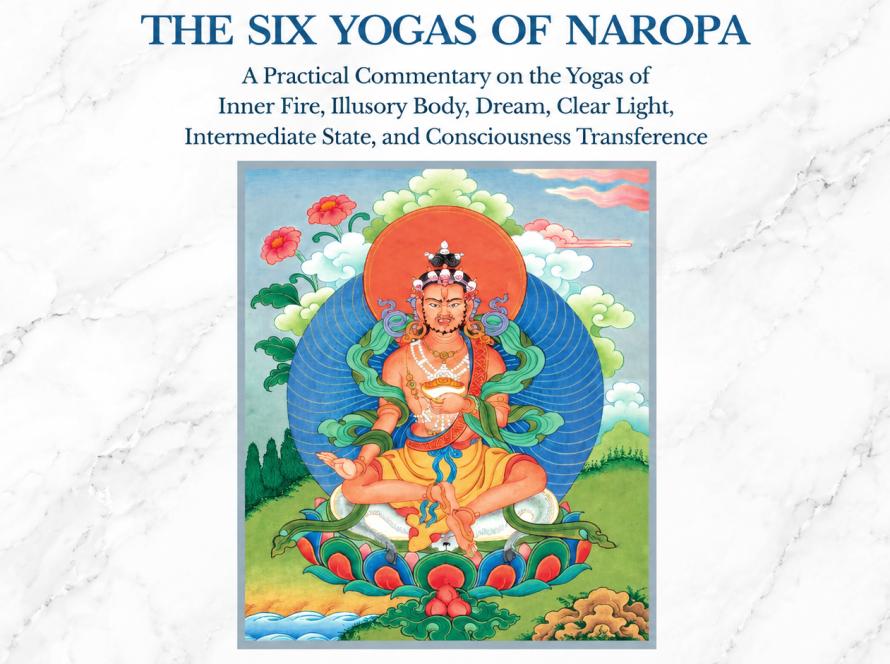
He wears a five-pointed jeweled crown with loose princely hair, a calm and lowered gaze, and rich ornaments symbolizing accumulated compassionate qualities. His right hand forms a teaching or blessing mudra; his left holds a lotus stem blossoming into a jewel, likely the Chintamani, a wish-fulfilling jewel symbolizing the clearing of misfortune. He sits in full lotus posture on a multicolored lotus throne, with flowing scarves suggesting active, engaged enlightenment.
In Buddhist Literature
He appears across Mahayana and tantric texts: paying homage to Avalokiteshvara in the Lotus Sutra, receiving a dedicated obstacle-removing mantra in the Mahavairocana Tantra, and serving as the primary dialogue partner in the Ratnamegha Sutra. His formal iconography is documented in the 11th-century Nishpannayogavali. In Vajrayana, he’s typically placed in the retinue of Amoghasiddhi, one of the Five Dhyani Buddhas.
The Bodhisattva You Call On Mid-Meditation
What sets him apart is how operational his role is practitioners invoke him in the moment a hindrance arises: the mind drifting into craving, flaring with irritation, or stalling in doubt. Even advanced practitioners face subtler versions of these hindrances; meditating on him is a steady, repeated practice, not a shortcut.
Four questions his symbolism invites:
- What attachments are clouding my judgment right now?
- What fears are keeping me from acting with compassion?
- Which habits are quietly weakening my mindfulness?
- Where could wisdom replace confusion if I looked honestly?
Conclusion
Sarvanivaranavishkambhin embodies one of Buddhism’s most fundamental principles: clearing away what blocks awakening ignorance, doubt, distraction, and karmic obscuration so natural wisdom can emerge. Less famous than his companions, but no less essential, he reminds practitioners that enlightenment isn’t reached by doing nothing, but by steadily overcoming the mental obstacles that stand between us and our true nature.