


Introduction
In Tibetan thangka painting, every figure is not just an artistic expression but a precise visual scripture. Among the most important distinctions in this sacred art form is the difference between a Buddha and a Bodhisattva. While both represent enlightened beings, their visual depiction, symbolism, and spiritual meaning differ significantly. Understanding this distinction helps practitioners and viewers read thangkas as structured spiritual maps rather than decorative paintings.
The Buddha in Thangka Art: Symbol of Complete Enlightenment
A Buddha represents the highest state of spiritual realization – complete awakening beyond suffering, desire, and ignorance. In thangka art, Buddhas are depicted with extreme simplicity and balance, reflecting their transcendence of all worldly attachment.
Their bodies are usually shown wearing plain monastic robes, without jewellery or royal ornaments. This simplicity is intentional, symbolizing detachment from material identity. The Buddha’s hair is depicted in short, tightly curled forms, and the ushnisha on the crown of the head represents supreme wisdom and enlightenment.
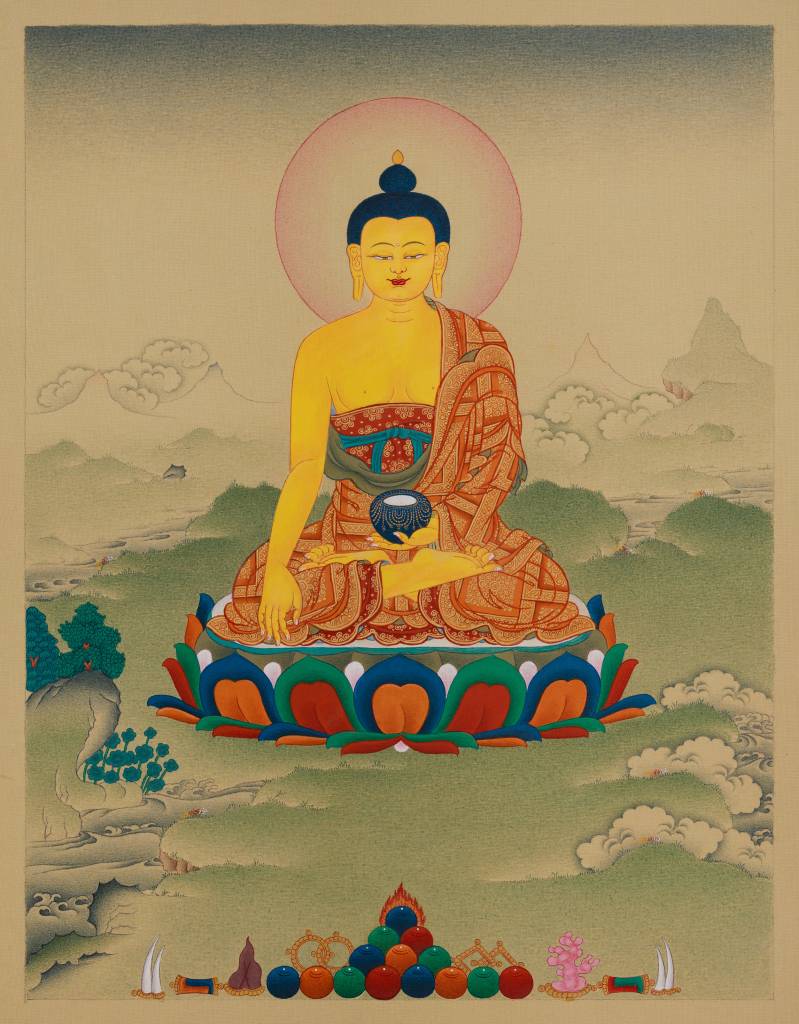
The expression of a Buddha is calm, inward-focused, and meditative. The gaze is often half-closed, directed toward inner awareness rather than the external world. Common examples include Shakyamuni Buddha and the Five Dhyani Buddhas, each embodying different aspects of enlightened consciousness such as wisdom, compassion, and transformation.
In essence, the Buddha form in thangka art represents the ultimate goal of spiritual practice – liberation itself.
The Bodhisattva: Embodiment of Compassion in Action
In contrast, a Bodhisattva is an enlightened being who chooses to remain in the cycle of existence (samsara) to help all sentient beings achieve liberation. Because of this compassionate vow, Bodhisattvas are depicted in a more active and adorned form.
Unlike Buddhas, Bodhisattvas wear royal garments, silk robes, crowns, earrings, and ornamental jewellery. These decorations symbolize their continued engagement with the world, not attachment, but compassionate participation in it. Their appearance resembles that of a princely figure, expressing vitality, grace, and responsiveness.
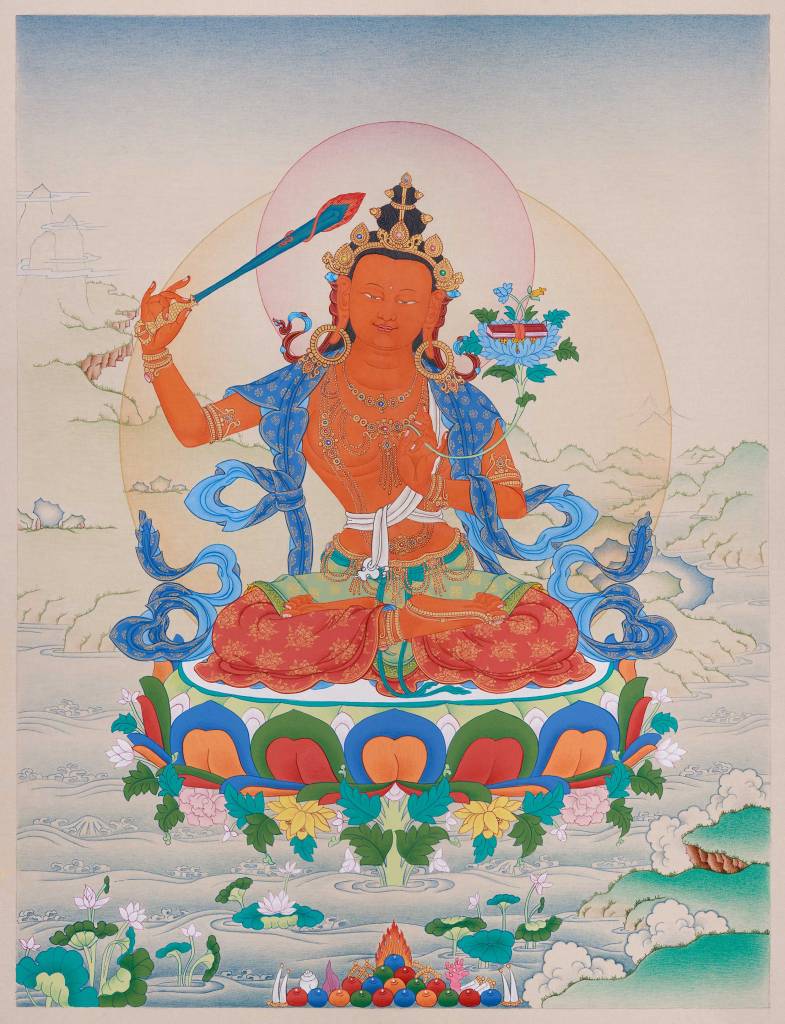
Their expressions are soft, compassionate, and outward-looking, reflecting emotional connection with beings in suffering. Bodhisattvas are often shown in dynamic postures, holding symbolic attributes such as the lotus (purity), sword (wisdom), or wish-fulfilling jewel (compassionate fulfillment).
Well-known Bodhisattvas include Avalokiteshvara (embodiment of compassion), Manjushri (embodiment of wisdom), and Vajrapani (embodiment of spiritual power). Each serves a distinct role in guiding practitioners on the path.
Key Iconographic Differences
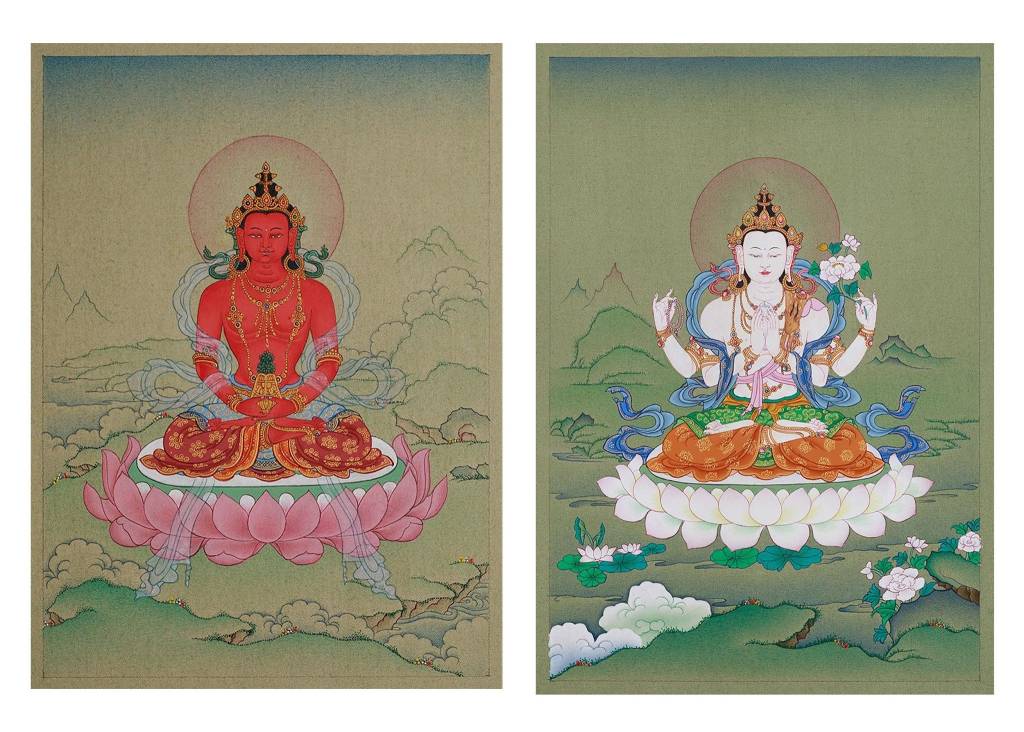
The difference between Buddha and Bodhisattva depictions follows strict iconographic rules in the Tibetan thangka tradition. These are not artistic choices but symbolic instructions rooted in Buddhist philosophy.
A Buddha is characterized by simplicity, stillness, and complete renunciation. A Bodhisattva is characterized by ornamentation, movement, and compassionate engagement. Buddhas embody the final destination of enlightenment, while Bodhisattvas embody the active path leading toward it.
Even posture reflects this difference. Buddhas are typically seated in deep meditation (dhyana mudra), while Bodhisattvas are more flexible in posture, often seated or standing with gestures of offering, teaching, or protection.
Spiritual Meaning Behind the Visual Distinction
The visual separation between Buddha and Bodhisattva serves a deeper meditative function. When a practitioner views a Buddha, the mind is guided toward stillness, emptiness, and realization of ultimate truth. When viewing a Bodhisattva, the mind is inspired toward compassion, ethical action, and engagement with the suffering of others.
Together, they create a complete spiritual framework: the Buddha represents realization, and the Bodhisattva represents compassionate action. One is the destination, and the other is the path.
Conclusion
In thangka art, the distinction between Buddha and Bodhisattva is a carefully preserved visual language that communicates the entire essence of Buddhist philosophy. Buddhas embody perfect enlightenment and inner stillness, while Bodhisattvas embody compassionate activity in the world. Understanding this difference transforms a thangka from a painting into a living map of awakening-guiding both the eye and the mind toward deeper spiritual awareness.


